If your client/browser supports it, you may prefer the
original Markdown version of this article.
Dispatches from Transylvania (II) : bears
Romanians have a complicated relationship with their bears.
On the one hand, bears are large, powerful, and dangerous. Transylvanian bears aren't the dog-sized, skinny black types we find in other parts of Europe: they're the full-fat ursus arctos, standing seven feet tall with four-inch claws. They do attack people, sometimes fatally. More commonly, though, they attack livestock which, as you might expect, isn't popular with farmers.
On the other hand, bears are cute. They're furry and playful, particularly as cubs.
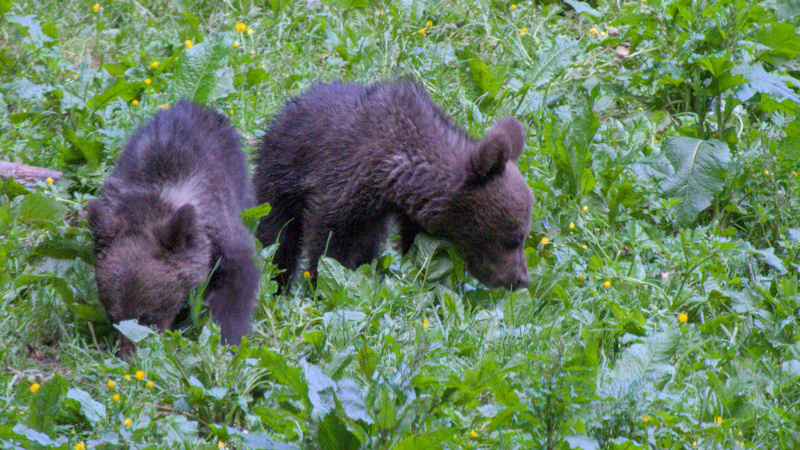
Romanian kids have bear stuffies, just as British kids do. In a sense, the bear is emblematic of Romania: bear images appear all over the place. Romanians are rather proud of their bears. Nobody denies that bears are a draw for tourists (like me); bears generate income for the regions where they are common, and these are often the least affluent parts of the country, most in need of funds.
But nobody mistakes a bear for a toy or a pet -- by the time they're even a year old -- as the chap in the photo below is -- they're clearly wild animals that merit respect. For all they admire their bears, Romanians don't trust them, and they certainly don't underestimate them.
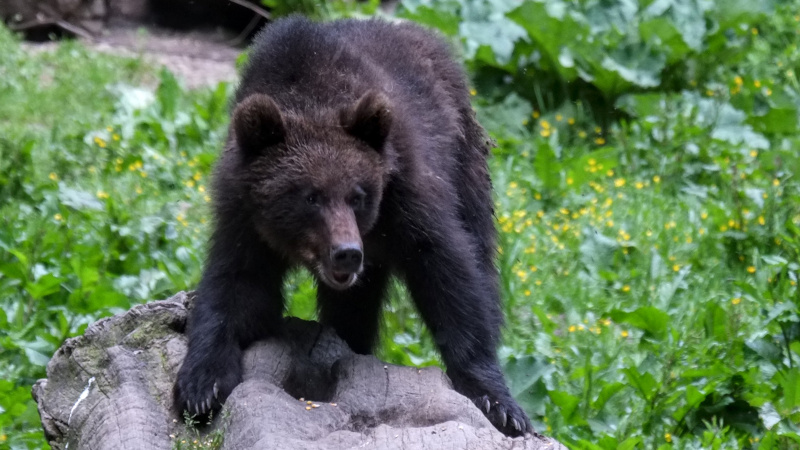
Romania is home to about six thousand bears. That's about one bear for every two thousand people on average. Of course, bears aren't uniformly distributed around the country: they are mostly found in relatively small regions in and around the Carpathians. These regions are usually well signposted, and sensible hikers take precautions.
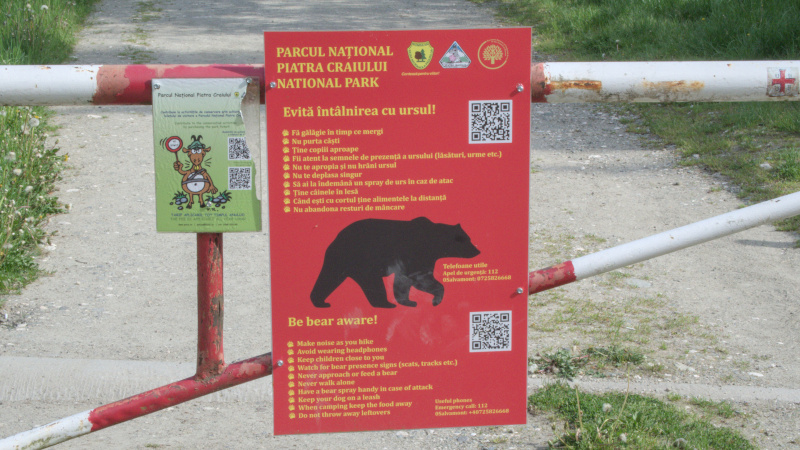
In my wanderings in the Carpathians I saw many signs that bears were present, particularly fresh bear poop and bear tracks. The only way I got close enough to photograph them, however, was to wait patiently in a hide. Romanian bears, for all their stature and their fearsome claws, are shy and skittish; they nearly always avoid human contact. Even a sudden noise noise sends them scurrying away and, oh boy, can they run. I don't think they can keep up a full gallop for very long, but I suspect they can keep it up for longer than I can.
It isn't entirely clear why bears are so twitchy, when they're so firmly at the top of the food chain. Bears do have predators, though, even if we don't count humans. The bear's main predator is, sadly, the bear. Bears fight all the time, often with fatal results. Male bears will kill a competitor's cubs, given a chance. Female bears, understandably enough, will fight the males to prevent this. Bears are not herd animals -- they really can't get along.
Still, even a single bear is a threat to just about any other animal.
Romanian mountain farmers maintain large packs of dogs, often decked out with spiked collars, to protect them and their livestock from bear attacks. One herd I passed when walking had at least a dozen such dogs, and I was told that they'd driven off a hungry bear only the previous day. I wondered why anybody carries on such a dangerous occupation as mountain farming, that offers such a meagre financial reward; the answer, of course, is that increasingly they don't.
Romania's ambivalent attitude to bears shows itself most vocally when discussing the contentious subject of hunting. Most parts of Transylvania have now banned, or strictly limited, the hunting of bears. It's fair to say, I think, that people who hunted bears in the past mostly didn't do it as a public service: they wanted a bear's head on their trophy wall. But these days many Romanians do see reducing the bear population as a public service, particularly those who've woken up to find a bear trying to chew its way into their larder.
The bear's natural hostility to its own species acts, to some extent, as a brake on numbers, but the population seems to be growing. Some argue that bears are becoming bolder, too, and more willing to enter towns and villages. I saw no signs of this myself, but I visited Transylvania in fair weather. I can see how the hunger that accompanies extremes of weather might encourage bears to take risks they would otherwise avoid.
In any case, what nobody wants is for bears to become habituated to human contact. The practice of putting out food for bears, so tourists like me are more likely to see them, is highly contentious, but widely practised. Tourists, after all, spend money.
In the end, how best to live side-by-side with bears in Transylvania is a complex question, and one that has no clear answer.
Published 2026-06-03, updated 2026-06-03
Categories
gemlogConverted from my Gemini capsule.